All you need to know about the Question Bank
A question bank is not a mock exam and not a flashcard deck — it's a diagnosis machine. How to use ours (and any qbank) without fooling yourself.
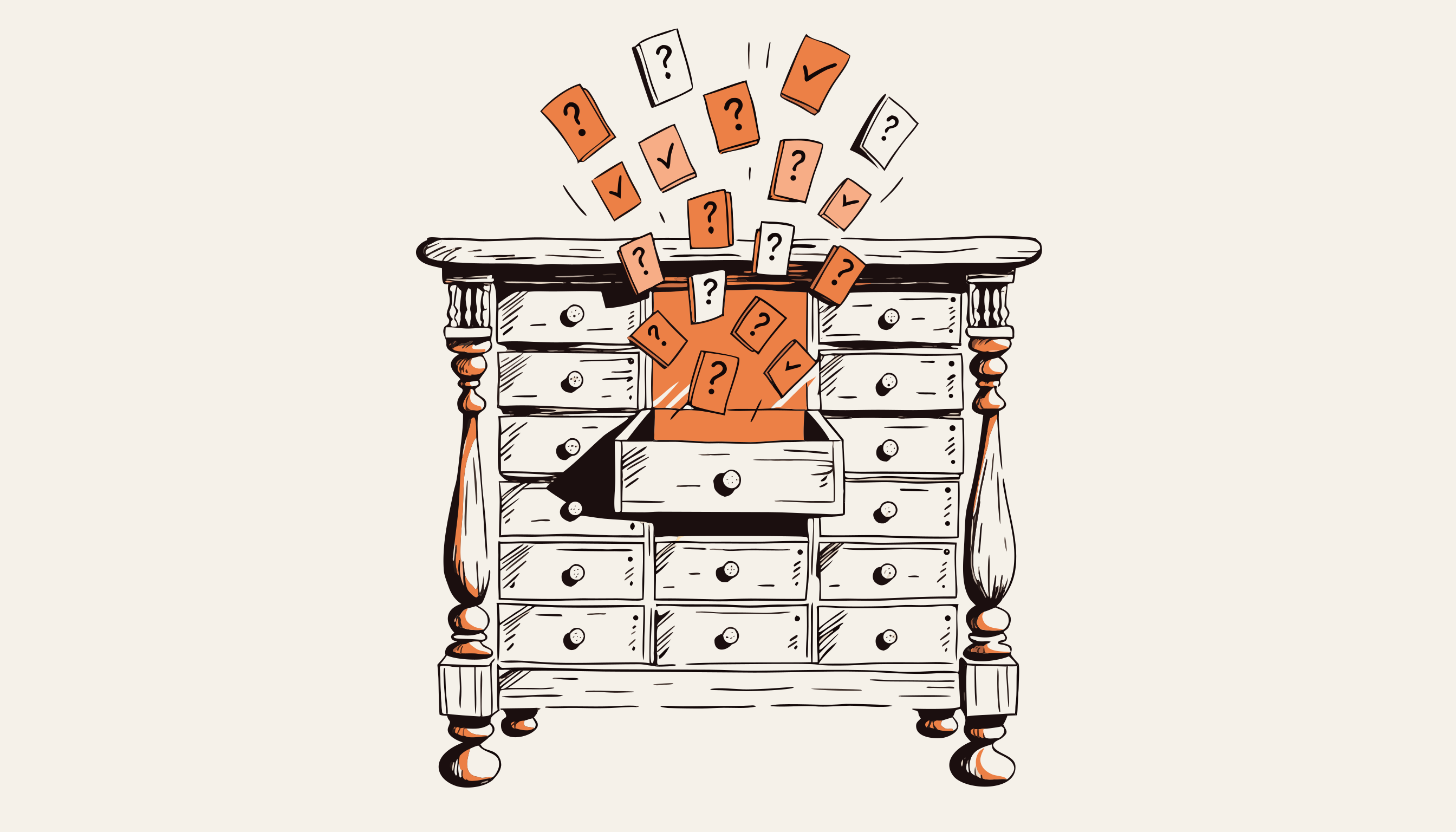
Every serious exam candidate eventually lives inside a question bank. Fewer ever ask what a question bank is actually for — and the wrong answer to that question wastes hundreds of hours.
A qbank is not a syllabus. Finishing it is not the goal. It's not a mock exam — that's what the timed Mock Lab is for. A question bank is a diagnosis machine: every question you attempt is a tiny probe into whether a concept survives contact with a clinical stem. The score is the least interesting output.
How the Meyshan Med Question Bank works, honestly. It is deliberately small and deliberately strict. The bank favours fewer excellent questions over volume: every item is an original clinical question that grades the decision, not the wording — and every item carries an "academic review pending" label until Meyshan has personally reviewed it, because on this site nothing self-certifies. Behind the visible bank, a founding set of questions waits in a quality pipeline: automated structure and ambiguity gates first, then an AI answering blind and an AI attacking the question as advisors, then — always last, always decisive — human medical review at the Review Desk. Coverage grows at the speed of honest review, not at the speed of generation.
What every answer does, regardless of bank size: you tag your confidence — Knew it, Unsure, Guessed — so a guessed-correct is treated as unknown instead of silently inflating your percentage. Every wrong and every guess records its concept in your Weakness Ledger and joins your weak queue. Every explanation teaches the full decision: why the right answer is right and why each wrong option is wrong, with the real distinction. And a missed concept offers a one-tap Lecture Rescue built underneath that exact gap. Spot a problem with a question? Report it in two taps — it lands on the same review desk, next to the question it's about.
The four habits that separate qbank users who improve from those who just accumulate percentages:
Read every explanation, especially when you were right — a correct answer for the wrong reason is a future wrong answer with better timing. Never mark "review later" as a way of not thinking now; the honest tags exist so the system schedules the return. Do mixed-system blocks early — real exams don't announce the chapter, and neither does a patient. And track your why-wrong pattern, not your score: misread the stem, missing fact, or missing prerequisite are three different diseases with three different treatments — the third one is what Lecture Rescue is for.
The Countdown log currently contains the opening plan; verified weekly results and screenshots have not yet been published.
The bank tells you where you're bleeding. The rest of the system exists to stop it.
— Meyshan · Start a block · How the bank works, honestly