How the 3D Atlas quiz works (and why locating beats labelling)
Anatomy lives in 3D; most anatomy questions live in 2D. The Atlas quiz closes that gap — here's how to use it properly.
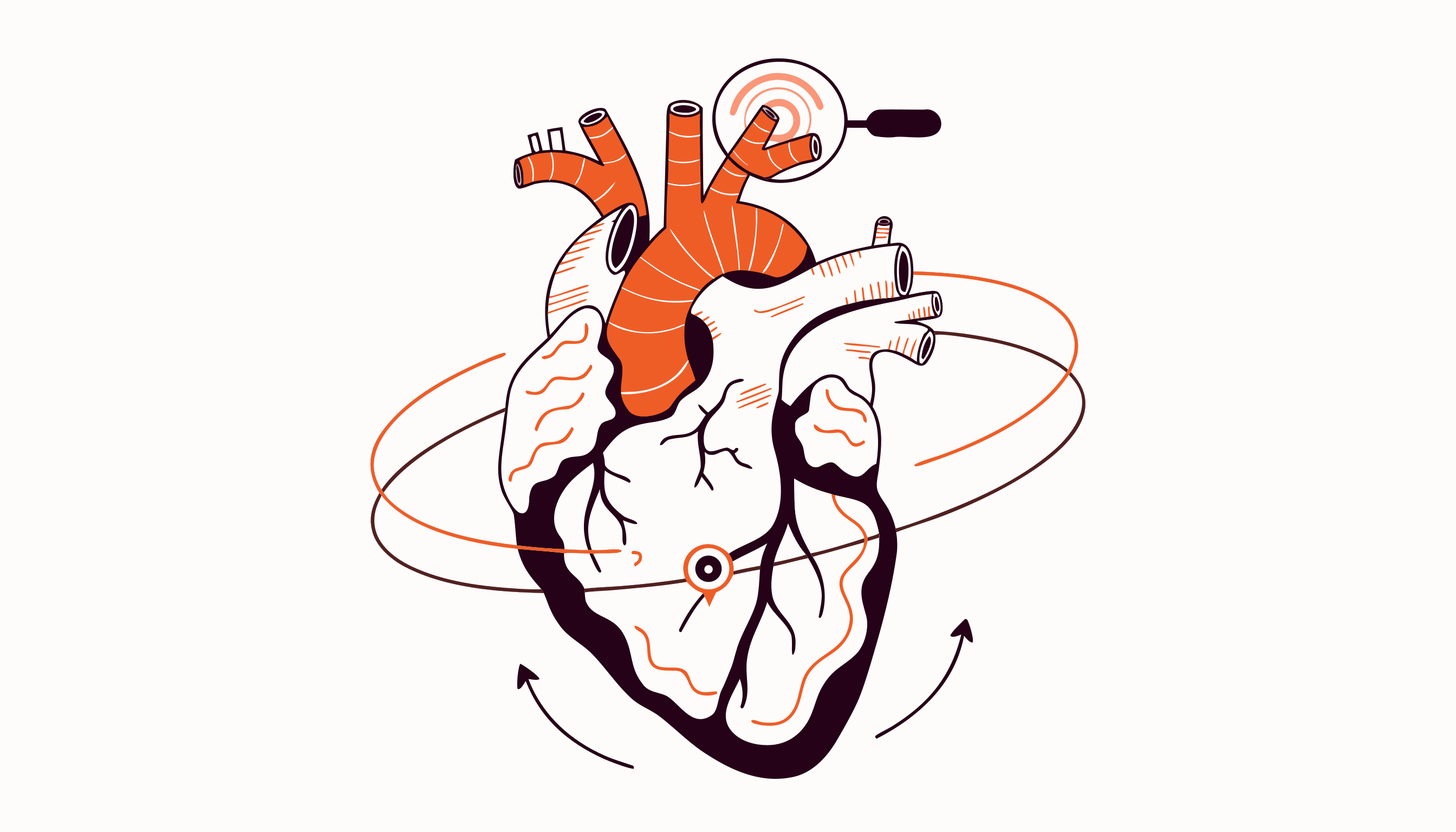
Here's a quiet scandal of medical education: anatomy is the most three-dimensional subject we learn, and we test it almost entirely in two dimensions. Flat diagrams, labelled arrows, the same textbook angle every time. Then a viva examiner rotates a specimen forty-five degrees and half the room goes silent.
The 3D Atlas on Meyshan Med exists for that gap, and its quiz mode — Locate the Structure — is deliberately the reverse of a labelling exercise. Labelling shows you a structure and asks for its name: recognition, the weakest form of knowing. Locating names a structure and makes you find it on a model you can rotate freely: spatial retrieval, the form vivas and surgeries actually demand.
How a session works. Pick an organ — there are eleven systems, heart to brain. The quiz names a structure. You rotate, zoom, and tap where you believe it lives. The atlas confirms or corrects, and — this is the part that matters — you then tag your answer honestly: Knew it, Unsure, Guessed. A lucky tap on the circumflex artery is not knowledge, and the system schedules it accordingly: missed structures enter FSRS Recall like any other card.
Three ways to use it better than I did at first:
Rotate before you answer, every time — the discipline of viewing a structure from at least two angles is the actual skill being trained, and tapping from the textbook angle wastes the whole point. Chase your reds: wrong locates flow into the Weakness Ledger like everything else, and a cluster of anatomy reds usually means one region, not twenty facts. And use the bridge in reverse — when a Lecture Rescue lesson mentions an anatomical term, it's a tappable chip that opens the atlas at that exact structure; the lesson and the model teach each other.
The honest limitations (the manual says this too): a browser model is not a cadaver, simplifications exist, and the atlas is a spatial-reasoning gym, not a dissection replacement. It also loads as a fast poster first and only becomes 3D when you engage it — deliberate, so the page stays quick on a hostel connection.
My own locate accuracy is a number for the Countdown log, where it can arrive as a screenshot instead of a claim.
— Meyshan · Open the 3D Atlas · The tech behind it