Does oxygenated blood always travel in arteries?
Direction of flow defines an artery or vein. Pulmonary and fetal circulation show why oxygenation is a separate question.
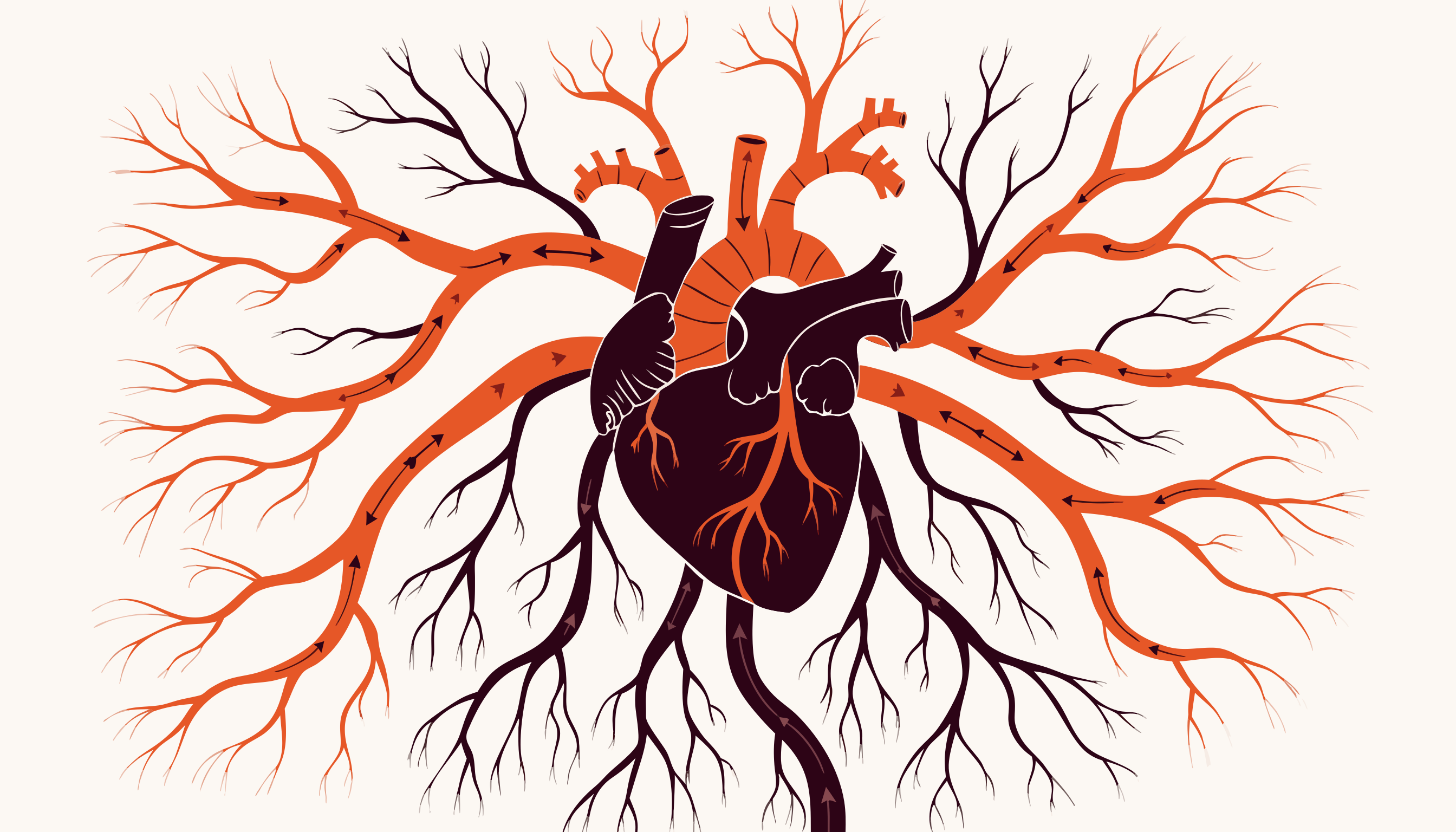
No. Arteries carry blood away from the heart; veins carry blood toward it. Oxygenation does not define either vessel type.
Revision status: this source-checked revision was prepared on 19 September 2026 and awaits qualified human clinical review. The older review does not certify these changes. This is introductory anatomy and physiology, not an interpretation of an individual patient's oxygen level.
Follow the pulmonary circuit
Blood travels from the right ventricle through the pulmonary trunk and pulmonary arteries to the lungs. After gas exchange, it returns through pulmonary veins to the left atrium. Pulmonary arterial blood is normally lower in oxygen than pulmonary venous blood; the names remain consistent because they describe direction. OpenStax, Circulatory Pathways: Pulmonary Circulation.
Do not memorise “artery means oxygenated” and then append exceptions. Learn the direction rule first. “Oxygenated” is useful shorthand here, not a claim that blood contains the maximum possible oxygen in all circumstances.
Apply the rule before birth
The placenta supplies oxygen to the fetus. The umbilical vein carries relatively oxygen-rich blood from the placenta toward the fetal heart; the umbilical arteries return relatively oxygen-poor blood toward the placenta. These are applications of the same direction rule. Fetal shunts and mixing make a simple red-versus-blue diagram an incomplete account of oxygenation. OpenStax, Fetal Development: Fetal Circulation.
Retrieve, then apply
Question: a vessel carries blood from the lung toward the left atrium. Which classification follows from that direction?
- A. A vein, even though the blood is normally relatively oxygen-rich.
- B. An artery, because oxygenation determines the name.
- C. A capillary, because every vessel associated with the lung exchanges gas.
Answer: A. B applies the wrong definition. C confuses the capillary exchange surface with the vessels returning blood to the heart.
Recall prompt: which single distinction names arteries and veins? Answer: their direction relative to the heart. State oxygenation separately, with the circulation and physiological context.
Return tomorrow and draw arrows for the pulmonary circuit from memory. The foundation week begins with oxygen diffusion and ventilation/perfusion once those exact lessons have clinical approval; each lesson leads to its own Recall question.
Source check: the linked OpenStax sections were accessed on 19 September 2026. Source checking and publication do not confer clinical approval. Review and correction policy.